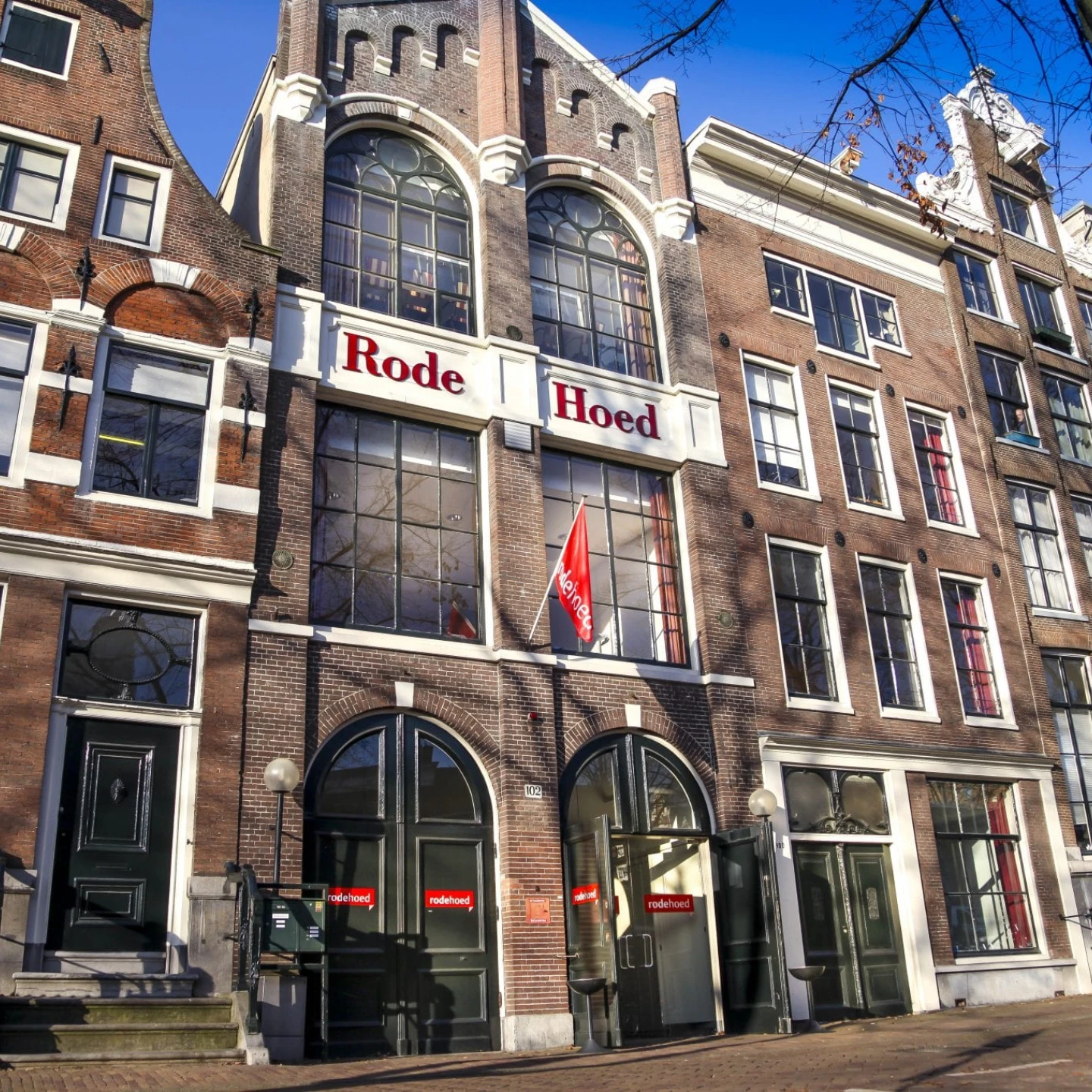
On Rode Hoed stage, abrasive debate alternates exploratory conversations, always in a safe and constructive atmosphere. Rode Hoed thus builds on its past as a safe haven: Amsterdam's oldest secretive church has offered Remonstrants freedom of thought and assembly since the 17th century. Even in the 21st century Rode Hoed, free of politics or religious affiliation, continues to provide shelter for thinking in progress.
The programming accommodates changing themes, new perspectives, diverse paradigms and leading stage guests. On a local, national and international level. Our small permanent editorial team develops its own formats. In addition, we invite refreshing thinkers, doers and partner organizations to help shape our programs.
A special mix of frontrunners and varied audiences - from passionate activists and young conservative thinkers to CEOs and Russian investigative journalists - meet at the bar to continue the conversation after the programs end.
Rode Hoed:
Invites precursors of diverse social developments to reflect further on stage
Actively engages the public in its programs
Initiates collaborations and meeting between audience and stage guests
History of Rode Hoed
Rode Hoed is located in a monumental building on the Keizersgracht in Amsterdam. A Rode Hoed in the facade recalls the building's original purpose: a millinery. A Remonstrant Shelter Church arose in the garden in the seventeenth century and served until the 1950s.
In 1989, poet and theologian Huub Oosterhuis breathed new life into the building and established a leading and thriving center for religion, meaning and poetry. In the second decade of its existence, the Rode Hoed shifted its focus to social debate and also programmed many cultural offerings. Weekly church services of the Ekklesia held, which to this day find a home in the old shelter church.
Since 2017, the Rode Hoed has been part of Amerpodia, which includes the culture houses The New Love and Felix Meritis part of it. A permanent editorial team administers the programming of the various cultural houses. This allows for cross-pollination between networks, disciplines and specializations of programmers and programmers.